

Best Walking Routes in Milan
Milan is often described as fast-paced, fashionable, and business-focused. But slow it down to walking speed, and you’ll discover a completely different side of the city. Behind the polished shop windows and modern skyline lies a place filled with hidden courtyards, quiet canals, artistic neighborhoods, and leafy parks.
The best way to truly experience Milan isn’t by taxi or metro — it’s on foot. Here are the most rewarding walking routes that let you see the city at its most authentic.
A Classic Stroll Through the Historic Heart
If it’s your first time in Milan, start where the city’s energy is strongest.
Duomo to Galleria Vittorio Emanuele II
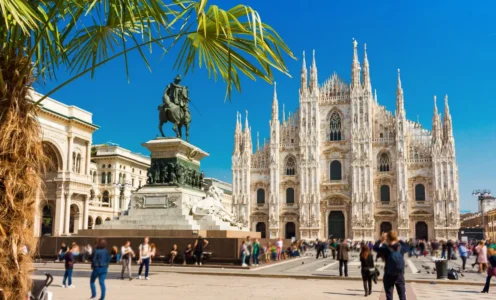
Begin at the Duomo di Milano. Even if you’ve seen photos, standing in front of it is something else entirely. The intricate marble façade, the spires reaching into the sky — it demands a slow moment of appreciation. If you have time, take the elevator (or stairs) up to the rooftop terraces for panoramic views over the city.
From there, step into the Galleria Vittorio Emanuele II, just beside the Duomo. The glass ceiling, mosaic floors, and elegant arches make it feel more like a palace than a shopping arcade. Grab a coffee at one of the historic cafés and simply watch Milan go by.
Piazza della Scala to Brera
Exit toward Piazza della Scala, where the world-famous Teatro alla Scala opera house stands. Even from the outside, it carries a quiet grandeur.
From here, wander into the Brera district. The streets narrow, the pace softens, and suddenly you’re surrounded by art studios, independent boutiques, and ivy-covered buildings. It’s one of Milan’s most charming areas — perfect for getting pleasantly lost.
From Brera to Sempione Park
This route blends art, history, and green space in one relaxed walk.
Through Artistic Brera
If you didn’t explore much earlier, take time now. The Pinacoteca di Brera is home to important Italian masterpieces, but even without going inside, the neighborhood itself feels like an open-air gallery.
Street musicians often fill the small squares with music, adding to the atmosphere.
Castello Sforzesco
A short walk leads you to Castello Sforzesco, a massive red-brick fortress that once housed Milan’s ruling families. Walk through its courtyards and imagine centuries of history unfolding here.
Parco Sempione
Right behind the castle is Parco Sempione, Milan’s green lung. Locals jog, picnic, read, or simply stretch out on the grass. Walk toward the Arco della Pace (Arch of Peace), which provides a beautiful and symbolic endpoint to this route.
It’s a perfect place to pause and relax before heading back into the city streets.

Navigli
For a completely different mood, head south to the Navigli district.
Along the Naviglio Grande
The canals were originally designed with the help of Leonardo da Vinci, and today they create one of Milan’s most photogenic settings. During the day, you’ll find antique markets, artisan shops, and vintage stores lining the water.
The reflections at sunset are especially beautiful, turning the entire canal golden.
Aperitivo and Local Life
As evening approaches, the area comes alive. Navigli is famous for aperitivo — the Milanese tradition of drinks accompanied by generous snacks. Find a spot by the water and settle in.
It’s lively without feeling overwhelming, and it offers a glimpse into Milan’s social side.
Porta Venezia and Corso Buenos Aires
This route blends elegance with everyday city life.
Liberty Architecture and Elegant Streets
Porta Venezia is known for its Liberty-style (Italian Art Nouveau) buildings. Look up — the façades are full of decorative details that are easy to miss if you rush.
Nearby Corso Buenos Aires is one of Europe’s longest shopping streets, but step into the side streets and you’ll find quieter, more refined corners.
Indro Montanelli Gardens
Right in the area is the Indro Montanelli Gardens, a peaceful park that feels like a breath of fresh air in the middle of the city. It’s ideal for a slower walk, especially on a warm afternoon.
The Modern Side of Milan: Porta Nuova
Milan isn’t only about history. Its modern district offers a completely different walking experience.
Piazza Gae Aulenti
This raised, circular square feels futuristic compared to the rest of the city. Surrounded by sleek skyscrapers and fountains, it’s a hub of contemporary design.
Sit for a moment and watch how Milan blends business, style, and innovation seamlessly.
Bosco Verticale
Just a short walk away stands the famous Bosco Verticale — residential towers covered in trees and plants. They’ve become a symbol of sustainable architecture worldwide.
It’s a reminder that Milan constantly reinvents itself.
Hidden Corners Worth Wandering
Some of the best Milan moments happen when you stray from the obvious routes.
Cinque Vie
One of the city’s oldest neighborhoods, Cinque Vie (Five Streets) has Roman roots and a quiet, artistic atmosphere. It feels tucked away from the busier areas, with small galleries and design shops.
San Maurizio al Monastero Maggiore
Often called the “Sistine Chapel of Milan,” this small church surprises visitors with its extraordinary frescoes. From the outside, it looks modest. Inside, it’s breathtaking.
It’s proof that Milan rewards curiosity.
A Few Tips Before You Go
Wear comfortable shoes — Milan’s cobblestones are beautiful but unforgiving.
Early mornings and late afternoons are the most pleasant times to walk.
Spring and autumn offer the best weather.
Don’t over-plan. Leave room for spontaneous detours.
Final Thoughts
Milan reveals itself slowly. It’s in the echo of footsteps across a piazza, the quiet hum of conversation in a café, the reflection of old buildings in canal water.
Walking allows you to see beyond the fashion capital stereotype and discover a city layered with history, creativity, and modern ambition.
Sometimes the best route isn’t the one on your map — it’s the one you find by simply turning the next corner.